About Loeb Smith
 People
 Sectors
 Expertise
 News and Announcements
 News
News Legal Insights
 Legal Briefings
 Media
Media Locations
 Subscribe Newsletters
 Contact
An increasing number of high-net-worth individuals are utilizing offshore trusts in the Cayman Islands and the BVI as instruments for family wealth succession. The Discretionary Trust, as one of the most flexible types of trust, can grant the trustee(s) very broad discretionary powers. For more on Discretionary Trusts, please see our Briefing on Cayman Islands and BVI Trusts.
However, when establishing a Discretionary Trust, the settlor may often be concerned that the Trustee might make decisions contrary to their wishes and the Trust’s purpose. Therefore, at the time of establishing the trust, in addition to the trust instrument, the settlor will typically also sign a Letter of Wishes (LoW), outlining their intentions regarding trust beneficiary arrangements, assets distribution, investments, management, and other matters of the Trust. How effective is the Letter of Wishes? What details need to be considered in a Letter of Wishes? Can a Trust have only one Letter of Wishes throughout its existence? When multiple Letters of Wishes conflict, which one prevails? Will a Trustee’s decision contrary to the intentions expressed in the Letter of Wishes be valid? This Briefing will focus on these questions to provide a brief introduction to the effectiveness and role of the Letter of Wishes in Trusts.
1. Legal Effectiveness and Role of the Letter of Wishes
Firstly, the Letter of Wishes is a document separate from the Trust Instrument. Unlike the Trust Instrument, the Letter of Wishes does not have binding legal force. It is more akin to a guiding document, providing advisory guidance to the Trustee in administering the Trust. This means the Trustee has the discretion to decide whether or not to adopt the contents of the Letter of Wishes. Settlors might ask the question: if the Letter of Wishes lacks enforceability, isn’t creating one meaningless?
In practical application, if a Trustee’s failure to follow the Letter of Wishes results in harm to a beneficiary’s interests, the beneficiary may sue the Trustee in court. If the Trustees cannot provide sufficient evidence to prove that their decision-making process and purpose complied with the law and the provisions of the Trust Instrument, the court may assume the Trustees’ decision is invalid. For further details, see the section below on the validity of Trustee decisions contrary to the Letter of Wishes.
2. Considerations of details in Drafting the Letter of Wishes
Typically, settlors do not include excessive detail within the Trust Instrument itself. Instead, specific wishes for trust administration will be placed in the Letter of Wishes. The main contents of a Letter of Wishes usually cover the following points:
-
- Trust/Beneficiary Arrangements. These often include prioritizing children’s education and medical needs. Additionally, conditions for beneficiaries to receive benefits can be set, such as age thresholds or educational requirements. Specific scenarios for excluding beneficiaries can also be stipulated. For example, distribution may be suspended or a beneficiary may be excluded if they are involved in drug-related crimes.
- Principles for Trust Asset Distribution. The Letter of Wishes can specify methods for distributing Trust assets, such as regular distributions, emergency distributions, and distributions upon the occurrence of significant events.
- Explanation of Trust Purpose. Elaborating on the Trust’s purpose within the Letter of Wishes is also a key measure to prevent Trust disputes. For instance, stating that the Trust aims to safeguard the livelihood of family members and their descendants. The Trustee must then weigh these purposes when making decisions.
- Stipulation of Special Clauses. For example, sometimes, while the law grants Trustees discretionary power to invest the Trust assets, the Letter of Wishes could state a recommendation to limit the proportion of assets invested in high-risk financial products to a specific range.
- Confidentiality Requirements. The settlor may state in the Letter of Wishes that its contents will not be disclosed to minor beneficiaries.
3. Resolving Conflicts Between Multiple Letters of Wishes
A settlor can usually sign multiple Letters of Wishes, reflecting the flexibility of Trusts. The settlor can update and adjust such non-binding guidance to the Trustee over time, based on changes in their circumstances (e.g., family situation, financial status, tax environment). It is generally understood that the most recently signed Letter of Wishes takes precedence, as it better reflects the settlor’s current situation and intentions. To avoid conflicts between multiple Letters of Wishes, a new Letter of Wishes should clearly and explicitly state that it revokes and replaces all prior Letters of Wishes or specified prior Letters of Wishes.
However, if the settlor fails to explicitly revoke prior versions in the new Letter of Wishes and conflicts arise between the old and new documents, the Trustee can face difficulties in decision-making. In such cases, the Trustee needs to consider all the Trust documents and make decisions based on the settlor’s overall intent. If the conflict is irreconcilable, the Trustee should seek legal advice to determine the course of action that best serves the interests of the Trust and aligns with the settlor’s true intentions, while avoiding liability for breaching fiduciary duties.
4. Validity of Trustee Decisions Contrary to the Letter of Wishes
As mentioned, the Letter of Wishes itself lacks binding force. This means that, under specific circumstances, the Trustee has the right to make decisions that deviate from or even contradict the instructions in the Letter of Wishes. However, this does not mean the Trustee can arbitrarily disregard the settlor’s wishes. The Trustee’s power to deviate is strictly limited by the core requirement that the Trustee must fulfill his/her/its fiduciary duties, particularly the duties of loyalty, prudence, and adherence to the Trust’s purpose and terms.
Referencing a classic case, the Wong Case (Grand View Private Trust Company v Wong & Others [2022] UKPC 17), the UK Privy Council (whose judgment is persuasive authority in the Cayman Islands and the BVI) issued a number of guiding principles.
Based on the facts stated in the UK Privy Council’s judgment, the Wong brothers co-founded the large Taiwanese conglomerate Formosa Plastics Group (FPG) in the 1950s. In 2001, the brothers established two Bermuda trusts. The first was a discretionary family trust named the Global Resource Trust No. 1 (GRT), holding approximately US$560 million worth of FPG shares, with the beneficiaries being the settlors’ children and descendants. This discretionary family trust also granted the Trustee the discretionary power to add or remove “any person or class or description of persons” to the beneficial class of the Trust. The second Trust was a purpose trust named the Wang Family Trust (WFT), serving both charitable and non-charitable purposes. In 2005, The Trustee of the GRT exercised its powers of addition and exclusion to exclude all family members of the founders from the beneficial class of the Trust, and to add the Trustee of the WFT as the sole beneficiary. The dispute accordingly focused on the GRT trust deed, which granted the Trustee the power to add or exclude beneficiaries. Further, as early as 2001, the founding brothers had signed a memorandum of wishes before establishing the Trusts. This memorandum stated their intention in establishing the family trust was for the benefit of their children. The UK Privy Council admitted this memorandum as evidence, concluding that the purpose of the GRT discretionary trust was for the benefit of the founder’s family members. According to the Letter of Wishes, if the family Trust was established to benefit the family, how could excluding the family members to benefit another Trust serve a proper purpose? Consequently, the UK Privy Council found that the Trustee’s exercise of its power to exclude the existing beneficiaries and add the purpose Trust as a beneficiary was invalid.
Although the above case is an extreme and unusual example, it illustrates that a Trustee cannot ignore the settlor’s wishes and purposes when exercising their administrative powers. However, when dealing with such cases, courts will not automatically find a Trustee in breach simply for not following the Letter of Wishes. The reasonableness of the Trustees’ decision-making process and basis, and whether they have complied with their fiduciary duties, are also crucial factors. The court will consider the Letter of Wishes as significant evidence for understanding the settlor’s intent.
5. Summary
The Letter of Wishes, as a key non-binding document within a Trust, plays an indispensable role in family wealth succession planning. Its core value lies in providing guiding principles for the Trustee regarding the management of Trust assets, distribution of gains or profits, and addition or removal of beneficiaries, thereby significantly compensating for the potential lack of detailed execution provisions in the Trust Instrument, which prioritizes flexibility.
Although the Letter of Wishes itself lacks binding legal force, its practical influence and risk management value in practice of Trust administration cannot be overlooked. When making discretionary trust administration decisions, Trustees should fully understand the settlor’s Trust intentions to avoid dispute.
Further Assistance
This publication is not intended to be a substitute for specific legal advice or a legal opinion. For specific advice on the matters covered in this Legal Insight, please contact your usual Loeb Smith attorney or any of the following:
E: gary.smith@loebsmith.com
E: robert.farrell@loebsmith.com
E: elizabeth.kenny@loebsmith.com
E: vanisha.harjani@loebsmith.com
Share to WeChat
“Scan QR Code” in WeChat and tap ··· to share.
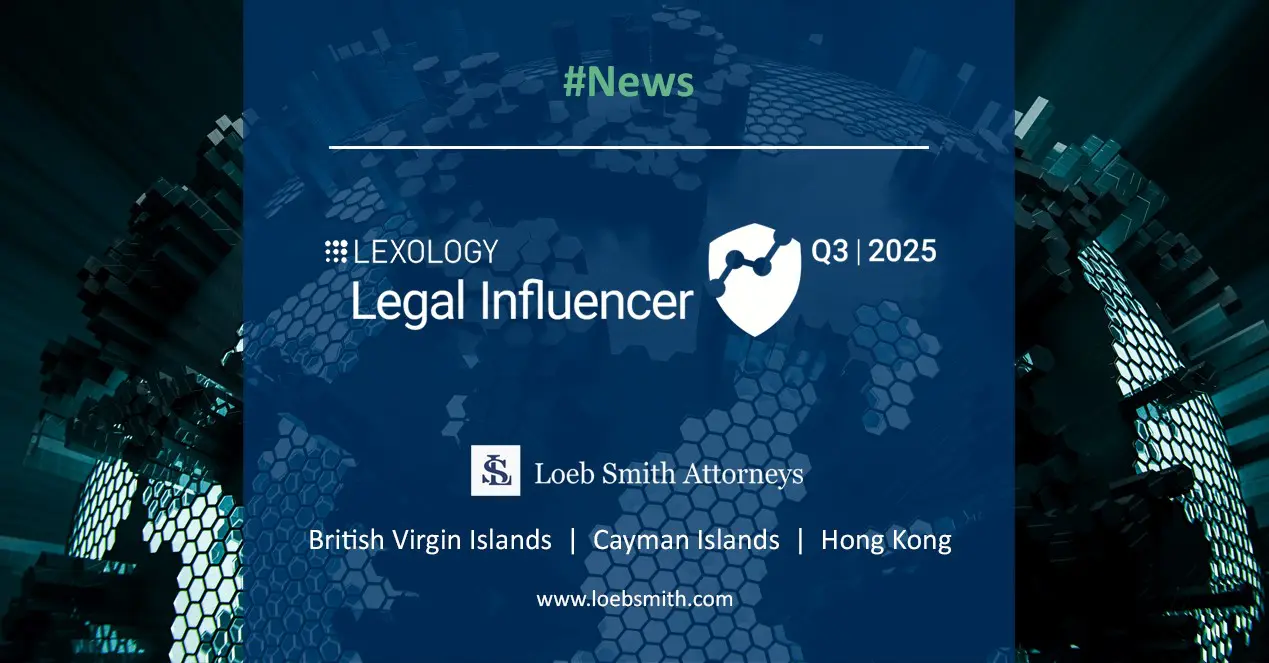
Our firm has been ranked as Lexology Legal Influencer for Private client – Central and South America for Q3 2025. This is the third ranking from Lexology this year.
Share to WeChat
“Scan QR Code” in WeChat and tap ··· to share.
Loeb Smith was honoured to be awarded Law Firm of the Year: Client Service at the Hedgeweek® US Awards 2025 held last week in New York.
Partner, Robert Farrell, and Senior Associate, Juliette Schembri, attended the award gala to accept the accolade and celebrate this achievement. This recognition underscores the firm’s consistent commitment to providing exceptional legal services to clients worldwide. This honour inspires us to continually push forward, grow stronger, and deliver effective legal advice and solutions to our clients.
Event photos: US Awards 2025 – Hedgeweek – Law Firm of the Year – Client Services | Loeb Smith
Global Vision. Client Focus.


Share to WeChat
“Scan QR Code” in WeChat and tap ··· to share.
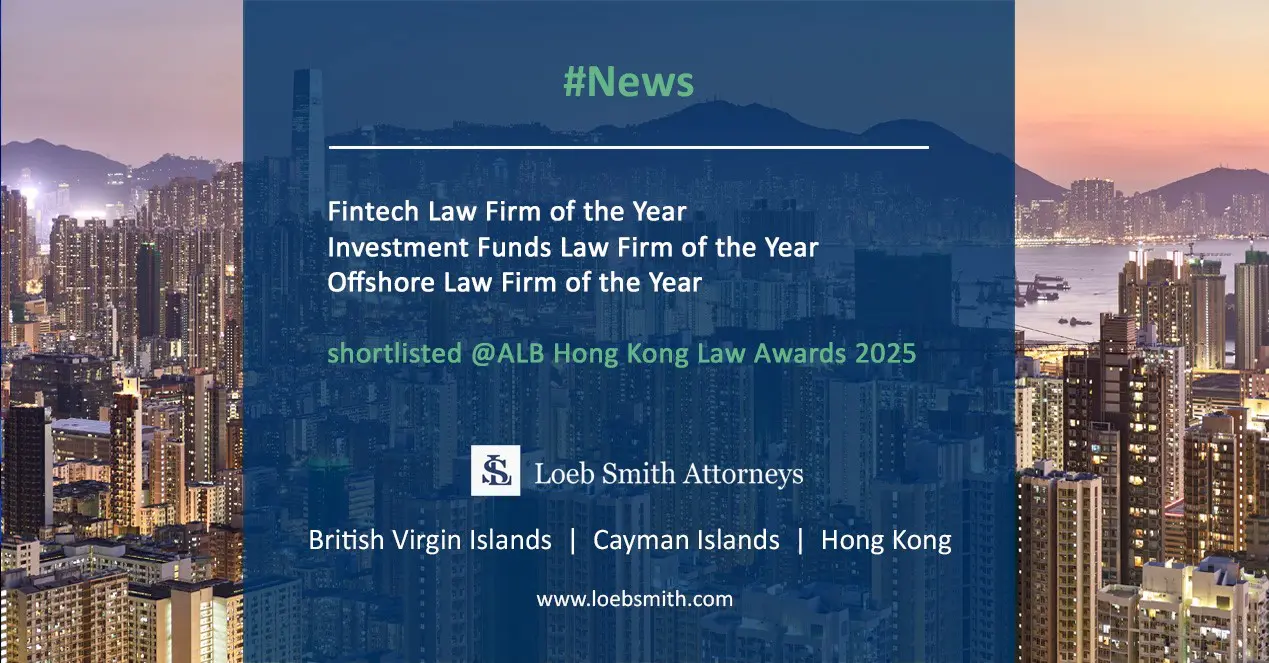
We are so excited to share that @LoebSmith has been shortlisted in three categories at the ALB Hong Kong Law Awards 2025, namely:
- Fintech Law Firm of the Year
- Investment Funds Law Firm of the Year
- Offshore Law Firm of the Year
The winners will be announced at the ceremony on 12 September 2025 in #HongKong.
Thank you all who contributed to this achievement!
Share to WeChat
“Scan QR Code” in WeChat and tap ··· to share.
We have also been shortlisted for the first time for the Asia Legal Awards 2025 recognising the region’s most outstanding legal achievements. Now in its 12th year, this prestigious ceremony honours the most significant transactions, cases, and legal work that have shaped the industry across Asia.

Well done Hong Kong team!
Share to WeChat
“Scan QR Code” in WeChat and tap ··· to share.
Overview
Yuri is an Associate in Loeb Smith’s Hong Kong office. She has over 5-years cross-border legal services experience as an attorney in another jurisdiction where she advised on the formation and launch of investment funds, trusts and finance related matters. She speaks Mandarin, English and Korean.
Yuri specialises in advising on the formation and launch of investment funds in both Cayman Islands and British Virgin Islands, and also on M&A, joint venture transactions, series financings, and other corporate involving various Cayman Islands or BVI trusts and company structures. For private clients, she also advises on various Cayman Islands and BVI trusts and foundations companies.
Latest Updates and News

INSIGHTS | 05 June 2026
Wahaha ruling underscores benefits of lifetime offshore trusts
Families and businesses in Hong Kong, mainland China and across Asia have long used BVI or Cayman corporate vehicles as holding entities for their businesses and assets.
INSIGHTS | 05 June 2026
Cayman Islands – Cryptoassets and Blockchain (part 2)
Fiat currency transactions – What rules and restrictions govern the exchange of fiat currency and cryptoassets?
INSIGHTS | 04 June 2026
Cayman Islands – Cryptoassets and Blockchain (part 1)
What legal framework governs cryptoassets? Is there specific legislation governing cryptoassets and businesses transacting with cryptoassets?
INSIGHTS | 21 May 2026
Voidable Transactions in the British Virgin Islands
In certain circumstances, the liquidator of a British Virgin Islands (“BVI”) company may be able to set aside certain transactions which took place in the lead up to the company’s liquidation. It is important for those concerned with the affairs of a BVI company that they are aware…
INSIGHTS | 19 May 2026
Preference shares and redemption rights in the Cayman Islands – an overview
Explore the key features of preference shares and redemption rights in Cayman Islands exempted companies, including investor protections, redemption procedures, and legal considerations for venture capital and private equity investors.