Overview

Robert is a Partner based in Loeb Smith’s office in the Cayman Islands. Robert relocated to the Cayman Islands from the UK in 2021 where he practiced as a Banking & Finance lawyer for 12 years. Robert now advises on a broad range of matters covering corporate (including M&A) commercial, banking & finance, investment funds, crypto and securities investment business matters.

In addition to his legal qualifications, Robert also has qualifications from the London School of Economics & Political Science in Real Estate Economics and Finance.

Experience

Robert has the following experience and expertise:

  • Corporate – advising on cross-border M&A, statutory mergers, joint ventures, acquisitions, reorganizations, private equity and merger take privates;
  • Commercial – undertaking general commercial advisory work ranging from trade and business licensing, local companies control licensing, strategic advice on economic substance compliance, consignment agreements, services agreements and IP licensing;
  • Banking & Finance – advising lenders and borrowers on international finance transactions, including advising on local security registration requirements and providing legal opinions to international lenders on local law matters;
  • Investment Funds – advising on the formation and launch of investment funds across a broad range of strategies and sectors (including cryptocurrency / digital asset funds), as well as portfolio investments and financing throughout the life of the investment fund; and
  • Crypto / Web3.0 – advising on client’s regulatory status under local ‘VASP’ legislation and applying for registrations and licenses as required.

Unlike many lawyers, Robert can ‘evaluate the numbers’, enabling him to provide advice in a commercially relevant context.

Overview

Gary is a Partner in, and leads/coordinates, the firm’s Investment Funds Group. He worked as a Private Equity/M&A attorney in England for many years before moving to the Cayman Islands in 2009 to work as a Corporate/Investment Funds attorney.

Chambers & Partners Global has ranked Gary Smith in the top tiers of Investment Funds lawyers in the Cayman Islands and he is described by sources as: “a bright guy, a team player, and a hard worker” (Chambers 2014) and appreciated for maintaining “strong client-relationships and is highly regarded by sources in North America and Asia” (Chambers 2017). “his knowledge impresses me and his creativity is very good. He is also very patient and intelligent” (Chambers 2018)

Experience

Gary has the following experience and expertise:

  • Gary has given expert evidence in the United States Federal Bankruptcy Court Southern District of New York relating to Cayman investment funds. He has also authored a wide range of articles and other publications on Cayman Islands and BVI law matters, including: “Fund Management – Cayman Islands” published by Lexology, 2021/2022;  and “Cayman Islands – Cryptoassets and Blockchain” published by Lexology, 2024. In 2022, he was ranked in Asia Business Law Journal’s A-List of the top offshore lawyers. The list is based on extensive research conducted and nominations received from in-house counsel in Asia, and Asia-focused partners from domestic and international law firms. https://law.asia/the-a-list-top-offshore-lawyers-2022/. He is ranked in IFLR1000 as “Highly Regarded” for in the Practice Area of Investment Funds.
  • Gary’s practice focuses principally on (i) Cayman Islands and BVI Investment Funds formation and launch, particularly hedge funds, private credit funds, private equity funds, venture capital funds, and funds investing in digital assets, (ii) M&A including Privatisations, (iii) Capital Markets including IPOs, SPACs, De-SPACs, and ongoing advisory, (iv) Corporate including joint ventures,  and PE/VC portfolio investments. He provides Cayman Islands law and BVI law advice to large corporates, companies, investment fund managers, allocators, sponsors, in-house counsel, onshore counsel, high net worth individuals, banks, and insurance companies in Asia (including the Middle East) and the Americas (U.S. Canada, Brazil, Argentina and elsewhere in Latin America) to deal with day-to-day legal issues and complex, strategic matters.


Amendments to the BVI Business Companies Act 2004 (the “BCA“) came into force on 1 January 2023 which changed the landscape for striking off, dissolving and subsequently restoring a British Virgin Islands (“BVI”) company to the Register of Companies (“Register”). This Briefing Note recaps the current position and aims to provide some practical insight into the restoration process. References to BCA are references to the BVI Business Companies Act 2004 as amended.

Position of companies struck-off and dissolved before 1 January 2023

The position for companies struck-off and dissolved before 1 January 2023 is set out in our previous article.

To recap briefly, prior to 1 January 2023, a BVI company that was struck-off for an administrative reason, such as for non-payment of government fees, could be restored to the Register. This involved the submission of a form to the Registrar of Corporate Affairs (“Registrar”) and the payment of the outstanding fees and penalties. An application could be made by the company, a creditor, a member or liquidator of the company. Under the previous law, a company which was struck-off for a continuous period of 7 years would be automatically dissolved from the end of the 7-year period. For a dissolved company, a similar (but less straightforward) process was available to restore the company. An application to restore a dissolved company was required to be made within 10 years of the date of dissolution. Such an application could be made by a creditor, former director, former member, former liquidator or any person who was able to establish an interest in the company being restored.

Transitional arrangements

There were transitional arrangements in place for companies which were struck-off or dissolved before 1 January 2023 and our previous article provides insight into these arrangements.

Struck-off company

To recap, a company which, as of 1 January 2023, was struck-off and not dissolved or restored had until 30 June 2023 to apply to the Registrar to be restored to the Register unless:

a) the previously applicable 7-year period ended prior to such date, in which case that earlier date would have been the deadline for applying for restoration; or

b) the previously applicable 7-year period ended after 30 June 2023, in which case 30 June 2023 would have been the deadline.

If a struck-off company was not restored on or by such dates set out above (whichever was applicable), that company would be dissolved the day after. Accordingly, 30 June 2023 was the last day that a struck off company could be restored otherwise it would have been dissolved on 1 July 2023.

Such an application would have had to be made to the Registrar under section 217 of the BCA (see below).

If the struck-off company was restored, the company was deemed never to have been struck-off the Register.

Dissolved company

A company which, as of 1 January 2023, had been struck-off and dissolved, had until 1 January 2028 to apply for restoration unless:

(a) the previously applicable 10-year period ends prior to such date, in which case that earlier date shall be the deadline; or

(b) the previously applicable 10-year period ends after 1 January 2028, in which case 1 January 2028 shall be the deadline.

Such an application would be made to the court under section 218 of the BCA (see below).

If the dissolved company is restored, the company is deemed never to have been dissolved.

Position of companies struck-off and dissolved after 1 January 2023

From 1 January 2023, a company that was struck-off for administrative reasons will only have ninety (90) days to make good on all outstanding fees and penalties and be restored. A failure to do so will mean that the Registrar may publish a notice in the BVI Gazette striking off the company. It can therefore be seen that the process of strike off and dissolution under the new regime happens almost simultaneously.

Restoration by Registrar

Notwithstanding the above, a struck-off and dissolved company can still be restored to the Register by the Registrar under section 217 of the BCA. The BCA simplifies the previous process. An application in the approved form may be made and if the conditions set out in section 217 are met, the company may be restored. The Registrar must be satisfied that the following conditions have been met:

  • the company was carrying on business or in operation as at the date it was struck-off and dissolved;
  • a licensed person is willing to be the company’s registered agent on restoration;
  • the registered agent has updated the company’s records and make the necessary declaration;
  • where any of the company’s assets have, following striking off and dissolution, vested in the Crown bona vacantia, the Financial Secretary has:
    1. expressly signified to the Registrar the Crown’s consent to the restoration of the company; or
    2. has, within 7 days of receiving a request to give the Crown’s consent to the company’s restoration, failed to respond to the request or refused consent;
  • the company has paid the applicable restoration fee and any outstanding penalties; and
  • the Registrar is otherwise satisfied that it would be fair and reasonable for the company to be restored.

The period for restoring a struck-off and dissolved company to the Register via the Registrar is 5 years. The 5 years is from the date on which the notice was published in the BVI Gazette striking the company off the Register. It should be noted from the above that it is possible for dissolved companies to be restored by way of an application to the Registrar, whereas this would have previously required an application to the court. This streamlined process for restoring dissolved companies is a welcome development.

Where a company is restored to the Register under section 217, the company is deemed never to have been struck-off the Register and dissolved.

Restoration by court

An application to the court to restore a dissolved company to the Register is still required under section 218 of the BCA in circumstances where:

  • the company was struck-off and dissolved following the conclusion of its liquidation (whether voluntary or involuntary);
  • on the date of dissolution, the company was not carrying on business or in operation;
  • the purpose of restoration is to:
    1. initiate, continue or discontinue legal proceedings in the name of or against the company; or
    2. make an application for the company’s property that has vested in the Crown bona vacantia to be returned to the company; or
  • in any other case or in which application cannot be made to the Registrar under section 217, the court considers that, having regard to any particular circumstances, it is just and fair to restore the company to the Register.

An application has to be made within 5 years of the date of the company’s dissolution.

The restoration application is made by way of a Fixed Date Claim Form together with an affidavit of the claimant, exhibit and a draft Order. The affidavit should set out, inter alia:

  • the purpose of the restoration; and
  • the claimant’s standing to restore the company. Under section 218(2), the following have standing to make an application to the court to restore a dissolved company to the Register:

(a) the Attorney General or any other competent authority in the Virgin Islands;

(b) a creditor, former director, former member or former liquidator of the company;

(c) a person who but for the company’s dissolution would have been in a contractual relationship with the company;

(d) a person with a potential legal claim against the company;

(e) a manager or trustee of a pension fund established for the benefit of employees of the company; or

(f) any other person who can establish an interest in having the company restored to the Register.

In the event that an application is made because the purpose of the restoration is to make an application for the company’s property that has vested in the Crown bona vacantia to be returned to the company, such application shall not be made unless the application is accompanied by the written:

(a) consent of the Crown signified by the Financial Secretary that the Crown has no objection to the company’s restoration;

(b) response of the Financial Secretary objecting to the company’s restoration; or

(c) a declaration of the applicant that the Financial Secretary has not responded to a request for consent to the company’s restoration within a period of 7 days after receipt of the request.

Notice

Notice of the application under section 218 of the BCA must be given to the Registrar, the Financial Secretary and, where the company was regulated under the Financial Services Act, the Financial Services Commission.

Court’s power to grant restoration upon application under section 218 of the BCA

Upon an application under section 218, the court may make an order to restore the company to the Register under section 218A subject to:

  • the court being satisfied that a licensed person has agreed to act as registered agent of the company;
  • the registered agent making a declaration in the approved form that the company’s records have been updated;
  • the company paying the restoration fee and any outstanding penalties in relation to the company; and
  • such other conditions as the court considers appropriate.

Evidence from the registered agent should be included in the exhibit to the affidavit.

It should be noted that in the event the company was dissolved following the conclusion of its liquidation (whether voluntary or involuntary), the court will not restore the company unless the claimant nominates a liquidator, the proposed liquidator consents to act and satisfactory provisions have been or will be made for the liquidator’s expenses and remuneration (if appointed).

Upon a valid application, the court “may” restore the company. The court can exercise its discretion to restore a company but the legislation is largely silent as to how the court can do this. However, case law has developed which provides some guidance as to how the court can exercise its discretion. From our experience, it is prudent that any application to restore a company addresses the court’s discretion to grant the application to restore the company. In Global Diversity Opportunity II Ltd v Registrar of Corporate Affairs (BVIHC (COM) 2020/0176), the BVI court confirmed that the court always retained discretion to restore a company. The court will exercise its discretion when it has taken all the relevant factors into account. Another BVI court case, Trade Management Ltd v The Registrar of Corporate Affairs (BVIHC (COM) 2021/0219), provided some more guidance as to the restoration of a company and the factors that the court will consider in an application. In Trade Management, it was stated that restorations are a two-step process. The first step is establishing the claimant’s standing. The second step (assuming the claimant has standing) is for the court to exercise its discretion. In Trade Management, having valuable assets in Hong Kong, failing to pay the registration fee because of an oversight and the application being supported by shareholders were factors which favoured the ordering of the company’s restoration by the court.

Order

The restoration of the company will not take effect immediately where the court makes an order restoring the company to the Register. There are several steps that need to be taken before this can happen:

  • a sealed copy of the order shall, within 30 days, be filed with the Registrar. If a sealed copy of the order is not filed with the Registrar within 30 days, it will cease to be valid; and
  • On receiving a filed copy of the sealed order, the Registrar shall restore the company to the Register upon being satisfied that the company has complied with the terms of the order. The effective date of restoration will be the date and time that the copy of the sealed order was filed. A certificate of restoration to the Register will be issued.

To avoid delays in the restoration of a BVI company, it is therefore prudent for the claimant to comply with the terms of the order once it has been made by the court. Where the company is restored to the Register, it is deemed never to have been struck-off the Register and dissolved.

Conclusion

As set out above, restorations of BVI companies are not merely an administrative act – they are applications that require careful planning in order to give the application the best chance of being granted. We have advised on a significant number of BVI company restorations. Please contact a member of our team who will be able to discuss the options available and to guide you through the restoration process.

View Full PDF

This publication is not intended to be a substitute for specific legal advice or a legal opinion. For specific advice on company restorations in the BVI, please contact your usual Loeb Smith attorney or any of the following:

E: gary.smith@loebsmith.com
E: robert.farrell@loebsmith.com
E: elizabeth.kenny@loebsmith.com
E: edmond.fung@loebsmith.com
E: vivian.huang@loebsmith.com
E: faye.huang@loebsmith.com
E: yun.sheng@loebsmith.com

Share to WeChat

“Scan QR Code” in WeChat and tap ··· to share.

QR Code

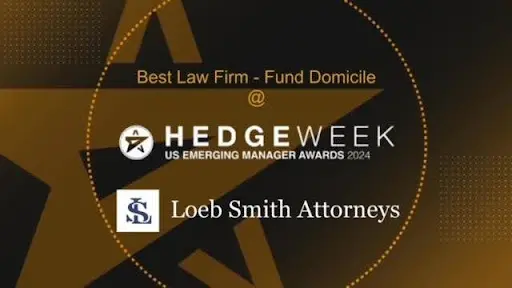
Loeb Smith Attorneys is pleased to announce that our Investment Funds team has won the “Best Law Firm – Fund Domicile” category at the Hedgeweek US Emerging Manager Awards 2024 for the second year in a row.

The awards recognise fund performance and service provider excellence within hedge fund emerging managers and were presented at an exclusive ceremony and networking event today, 6 June, at Convene 101 Park Avenue, New York. The pre-selection data for the fund manager shortlist was provided by Bloomberg. Congratulations to all winners: https://www.hedgeweek.com/hedgeweek-announces-winners-of-us-emerging-manager-awards-2024/

With offices in British Virgin Islands, Cayman Islands and Hong Kong, Loeb Smith advises on a comprehensive set of investment fund areas including Hedge Funds, Private Equity Funds, Venture Capital, Infrastructure Project Funds, Tokenized Funds, Real Estate Funds, Distressed Funds as well as other asset classes. Contact us to find more about our services.

About Loeb Smith Attorneys

Loeb Smith Attorneys is one of the leading offshore corporate law firms considered one of the most active and knowledgeable firms for advising on offshore investment funds formation and launch of all asset classes including public securities, private equity, venture capital, real estate, and virtual assets. Other areas of strength and growth are advising on M&A, Finance, Corporate Restructurings, Capital Markets, Regulatory Compliance, Investments, Logistics, Shipping and Aviation.

Considered a leading law firm in the Fintech and Blockchain Technology space, Loeb Smith also advises on token issuances, application for VASP licences for Web 3.0 businesses, Metaverse infrastructure and other virtual asset service providers, and utilising Cayman and BVI structures to develop virtual asset platforms for DAOs. Loeb Smith’s clients are investment managers, financial institutions, onshore counsels, and HNWIs who the firm advises on day-to-day legal issues and complex, strategic matters.

Some of our firm’s recent accolades are: winning Leading Firm in Client Satisfaction 2024 award by Legal 500; ranked in Investment Funds category and listed as one of the Firms To Watch for Corporate & Commercial by Legal 500 in 2024; named as Recommended Firm by IFLR 1000 from 2021 to 2024; named in Offshore Client Choice List by Asian Legal Business from 2021 to 2023; ranked amongst Top 30 Asia’s Fastest Growing Law Firms by Asian Legal Business in 2023 and 2024; ranked in The A-List: Top Offshore Lawyers by Asia Business Law Journal in 2022 and 2024; named as one of the ALB Hong Kong Firms to Watch 2024; winning Best Law Firm – Fund Domicile at Hedgeweek US Emerging Manager Awards 2023 and 2024; winning Best Law Firm – Fund Domicile at Private Equity Wire US Emerging Manager Awards 2023 and 2024; winning Best Law Firm – Fund Domicile at Private Equity Wire US Awards 2023; and winning The Best Offshore Law Firm – Client Service at With Intelligence HFM Asia Services Awards 2024.

View Full PDF

Share to WeChat

“Scan QR Code” in WeChat and tap ··· to share.

QR Code

Fireside chat with Edmond Fung

Fireside chat with Edmond Fung, Senior Legal Manager (pending registration as a Senior Associate with the Hong Kong Law Society) in Loeb Smith’s Hong Kong office advising on Litigation, Commercial Disputes and Insolvency in respect of British Virgin Islands law.

Edmond Fung is a Senior Legal Manager (pending registration as a Senior Associate with the Hong Kong Law Society) in the firm’s Hong Kong office advising on Litigation, Commercial Disputes and Insolvency in respect of British Virgin Islands (“BVI”) law. We have invited him to provide some background to himself, his practice, and his insight on recent market developments and trends in the legal market.

Loeb Smith (“LS”): Edmond, could you provide a brief overview of your current practice?

EF: I advise on international commercial litigation, restructuring and insolvency as well as trust matters. I act for clients from all over the world and they range from onshore law firms, financial institutions, multi-national companies, insolvency practitioners and high-net-worth individuals. With offices in the BVI, the Cayman Islands and Hong Kong, we are strategically placed to meet the demands of our clients wherever they are located in the world.

LS: Can you share more about your background?

EF: I was born and raised in the UK. My parents are from Hong Kong. I trained and qualified as a solicitor in England and Wales in 2016 and practiced in London until 2022. I then qualified as a solicitor in the BVI and relocated there in 2022 with another offshore law firm. I then moved to Hong Kong in 2024 with Loeb Smith.

LS: You have lived and practiced in the BVI as a litigator for a number of years before relocating to Hong Kong with Loeb Smith. What is it like practicing litigation in the BVI? What is the civil court system like?

EF: The litigation process in the BVI is efficient and modern. The BVI is a British Overseas Territory which has a legal system based on the English common law and it therefore offers certainty to litigating parties. The BVI is a member state of the Eastern Caribbean Supreme Court (“ECSC”). Civil procedure is governed by the ECSC Civil Procedure Rules 2023 together with practice directions issued from time to time. The amendments to the Civil Procedure Rules last year modernised and streamlined the litigation process in the BVI. The ECSC E-Litigation Portal also provides a user friendly and efficient system for active management of case files throughout the litigation process.

In terms of court system, there is a dedicated Commercial Division of the High Court (commonly known as the Commercial Court) in the BVI which manages high-value and complex commercial disputes in an expeditious and proportional manner. The Civil Division of the High Court deals with civil litigation that is outside the remit of the Commercial Court. The ECSC Court of Appeal hears appeals from the High Court and Commercial Court. The Judicial Committee of the Privy Council in the UK hears appeals from the ECSC Court of Appeal and acts as the final court of appeal for the BVI.

LS: What do you like about working at Loeb Smith?

Loeb Smith’s culture makes it a wonderful place to work. The work environment is collaborative, entrepreneurial and friendly. I joined the Hong Kong office earlier this year and everyone has been very welcoming, and I have settled into my role very quickly. We are a close-knit firm with three offices around the world. Even though I am now based in Hong Kong practising BVI law, my colleagues in our other offices are only ever one phone call away and we have already worked successfully together on some matters.

LS: Now you are based in our Hong Kong office, what are your impressions of living in Hong Kong so far?

EF: Hong Kong is a great city. It was very easy finding my feet in Hong Kong – it is well connected, convenient and efficient. These attributes make it easy to see why Hong Kong is one of the world’s premier financial centres and attracts individuals and businesses from all over the world. Whilst Hong Kong is often associated with urbanisation and skyscrapers, the countryside and hiking trails are never too far away or too inconvenient to get to – Hong Kong does have the best of both worlds.

LS: From those which you can disclose, what do you think are the most challenging client matters that you have worked on?

EF: The most challenging client matters are those which are time sensitive, involve multiple jurisdictions and/or languages and where the client is located in a time zone that is 12 hours ahead of yours. The matters I have dealt with often contain some, if not all, of these elements. The key to overcoming these challenges is responsiveness and communication with the client and colleagues, as well as having a clear strategy in terms of what needs to be achieved.

LS: You have been successful to date in your ability to earn the confidence of high-profile clients. What do you attribute that to?

EF: Aside from technical ability, it is understanding at the outset what the client’s objectives are and having a clear strategy to achieve the objectives. Regular communication with the client and being responsive to questions as and when they arise throughout the matter will manage the client’s expectations and will provide them with the client care they would expect from the legal team.

LS: What types of BVI related commercial disputes and insolvency matters have you recently been asked to advise on?

EF: I have recently been asked to advise on a fairly broad range of BVI related commercial disputes. These range from seeking injunctive relief to setting aside default judgment as well as reviewing loan agreements on behalf of lender clients in relation to enforcement action against defaulting parties. In terms of insolvency matters, I have recently been asked to advise on applying for recognition of BVI proceedings in a foreign jurisdiction.

What is interesting is that these matters often involve more than one jurisdiction – there is, more often than not, a non-BVI element to the matter and can involve jurisdictions including the Cayman Islands, England and Wales, Hong Kong or mainland China. The work is truly global and it is interesting to work with colleagues and clients in other jurisdictions on these matters.

LS: Lastly, are there any other developments and/or trends in the legal market that you see over the next 6 to 12 months?

EF: The BVI remains one of the world’s leading offshore financial centres and I expect that the amount of commercial litigation in the BVI to remain steady in the next 6 to 12 months. The rising popularity of digital assets has meant that the legal market has seen an increase in digital asset disputes (such as ownership disputes) and it is likely this trend will continue.

The BVI remains a popular jurisdiction for incorporating entities including investment funds and when market conditions tighten there are often disputes between investment funds and some of their investors. These disputes relate to, among other things, illiquidity and suspension of investors’ ability to redeem from the funds. The BVI could see more of these disputes in the near future.

In terms of insolvency, the BVI has in recent years dealt with a number of high-profile liquidations of insolvent companies and this trend may continue in the next 6 to 12 months.

In terms of restructuring, the BVI saw an increase in court-supervised restructurings last year. With the slowdown of the global economy and the financial difficulties facing the global real estate market, the BVI could see a further increase in the number of international restructurings originating from the real estate market.

LS: Thanks for your time, Edmond.

View Full PDF

This publication is not intended to be a substitute for specific legal advice or a legal opinion. For specific advice on BVI related commercial disputes/litigation matters please contact your usual Loeb Smith attorney or:

Edmond Fung
E: edmond.fung@loebsmith.com
T: + 852 3580 8487

About Loeb Smith Attorneys

Loeb Smith is an offshore corporate law firm, with offices in the British Virgin Islands, the  Cayman Islands, and Hong Kong, whose Attorneys have an outstanding record of advising  on the Cayman Islands’ law aspects and BVI law aspects of international corporateinvestment, and finance transactions. Our team delivers high quality Partner-led professional  legal services at competitive rates and has an excellent track record of advising investment  fund managers, in-house counsels, financial institutions, onshore counsels, banks,  companies, and private clients to find successful outcomes and solutions to their day-to-day  issues and complex, strategic matters.

Share to WeChat

“Scan QR Code” in WeChat and tap ··· to share.

QR Code

Economic Substance in the British Virgin Islands

circle shape

Share

circle shape

Related Contents

Share to WeChat

“Scan QR Code” in WeChat and tap ··· to share.

QR Code

There are certain notorious pitfalls to avoid in the context of British Virgin Islands (“BVI”) and Cayman Islands banking & finance and corporate transactions. In this article, we examine five such pitfalls. While there are no “one size fits all” solutions to these issues, we set out some practical considerations, solutions and risk mitigation tools (as appropriate) with respect to them.

1. Backdating documents

What is it?

Backdating a document refers to the practice of executing a document and dating it with an earlier date than the actual date of execution. The purpose of this practice is usually to try to gain an advantage by giving rise to legal rights before the actual date of execution.

Is it lawful?

Backdating may facilitate, among other things, fraud (or conspiracy to commit fraud), forgery, a misrepresentation, false accounting or a false statement by a company director and therefore is not encouraged as a matter of legal practice in either the BVI or the Cayman Islands.

The above being said, there are a few instances in which it may be permissible to backdate documents as a matter of BVI and Cayman Islands law. For example, the original version of a document may have been lost or damaged. In that instance, it is acceptable to re-execute an identical version of the missing or damaged document in order to replace it. Additionally, if the relevant parties reached an oral agreement on a certain date and documented it in writing at a later date, it would usually be acceptable to include the date of the oral agreement in the written agreement so long as the terms are identical. In both of these cases, though, backdating can only operate where the relevant agreement is executed as a “simple contract” and not as a deed. This is because signing is an integral part of the process of creating rights by way of deed.

Are there any practical workarounds?

If the parties to an agreement governed by BVI law or Cayman Islands law would like an agreement to take effect from a date earlier than the date upon which it was or will be signed and entered into, the parties should expressly state that the agreement is intended to be effective from a date earlier than the date on which the parties entered or will enter into it. Stating that the agreement will be effective from an earlier “effective date” will, however, only be effective as between or among the parties to the agreement. It will not affect those parties’ obligations under the terms of the agreement with regard to third parties who are not privy to the agreement. The obligations to third parties will almost invariably be based on the date that the agreement is fully executed subject to any applicable special circumstances. Any legal opinions delivered by offshore counsel will typically include a qualification to this effect.

2. Asset disposals by a BVI company

What is the general rule?

Subject to the exemptions noted below, the BVI Business Companies Act, 2004 (the “BCA”) provides that any sale, transfer, lease, exchange or other disposition of more than 50 per cent in value of the assets of a BVI company should be made in the following manner:

  1. firstly, the sale, transfer, lease, exchange or other disposition should be approved by that company’s board of directors;
  2. secondly, following the board approval referenced above, the board of directors should submit details of the disposition to the company’s shareholders for the purposes of authorization by way of a shareholders’ resolution; and
  3. thirdly:
    1. if the resolution of the company’s shareholders will be passed at a meeting, notice of that meeting, accompanied by an outline of the relevant disposition, should be given to each shareholder; and
    2. if the resolution of the company’s shareholders will be passed in writing, an outline of the disposition should be given to each shareholder.

Therefore, unless an exemption applies, shareholder approval is required with respect to a significant asset disposal by a BVI company. There is no analogous provision of law in the Cayman Islands pursuant to which shareholder approval is required in the context of a disposal.

Although the point is not necessarily settled in case law, the term “assets” is most commonly taken to mean “gross assets valued on an unconsolidated basis”.

What are the exemptions?

Shareholder approval is not required pursuant to the statutory mechanism set out above if the relevant BVI company’s disposition is:

  1. permitted pursuant to a provision of its memorandum of association or its articles of association (collectively, the “M&A”) which dis-applies section 175 of the BCA;
  2. a mortgage, charge or other encumbrance, or the enforcement thereof;
  3. in the usual or regular course of the business carried on by it; and/or
  4. intended to comprise a transfer of its assets into trust for the purposes of protecting the assets of the company for the benefit of the company, its creditors and its members and, at the discretion of the directors, for any person having a direct or indirect interest in the company.

It should be noted that there is no specific exemption with respect to a transaction that is completed for fair value and/or is on arm’s length terms.

For the purposes of establishing whether a transaction is in the “usual or regular course of the business” of a BVI company, it is important to have regard to that company’s ordinary business activities. For example, a company which is in the business of buying and selling property will not need shareholder approval to dispose of such property. However, whether a company which owns one property and seeks to dispose of it requires shareholder approval is a matter which is currently subject to a degree of uncertainty. Our view is that such approval should be obtained. In Ciban Management Corporation v Citco BVIHCV 2007/0301, it was held that a disposal of this nature would not require shareholder approval, but this authority should be approached with caution in our view as the BVI company in question had been engaged in the property business and was simply disposing of its last property. The more prudent reading of this exemption, in line with the comments of the Privy Council in Ciban Management Corporation v Citco (BVI) Ltd [2020] UKPC 21, would be to regard the words “course” and “business” as requiring something ongoing in the nature of a commercial enterprise, as opposed to a one-off activity, and to obtain shareholder approval where there is any uncertainty.

What are the consequences of a breach?

The BCA does not set out the consequences of failing to comply with its terms and we are not aware of any caselaw authorities which directly address this point. That being said, it is relatively unlikely in our view that a disposition to an innocent third party would be held to be void or voidable as third parties are generally entitled to assume that the internal management of a BVI company has been properly conducted as a matter of BVI law. Disgruntled shareholders may nevertheless be entitled to exercise their statutory rights to have their shares purchased by the company for fair value in the event of a breach.

What risk mitigation strategies should be considered by a party that is making an acquisition from a BVI company?

A party that is making an acquisition from a BVI company should consider the following risk mitigation strategies:

  1. review the BVI company’s M&A to ascertain whether section 175 of the BCA has been dis-applied;
  2. obtain a valuation report with respect to the company’s assets to identify whether the disposal may trigger section 175 of the BCA;
  3. include a due authorization representation with respect to the BVI entity in the relevant sale agreement;
  4. designate shareholder resolutions as a condition precedent to the relevant sale if appropriate, or obtain evidence (such as a certificate from a director) that such resolutions are not required under section 175 of the BCA; and/or
  5. obtain a legal opinion as to the legality of the disposal as a matter of BVI law.

3. Disclosing directors’ conflicts of interest

What is the position set out in the BCA?

Unlike Cayman Islands law (where the requirement for disclosure of a director’s interests in a transaction is typically set out in a Cayman Islands company’s articles of association instead of in any statute), BVI law includes detailed statutory provisions in the BCA regarding the disclosure of a director’s interests in a transaction.

In summary, sections 124 and 125 of the BCA provide that:

  1. unless a transaction is between the director and a BVI company and is entered into in the ordinary course of that company’s business and on usual terms and conditions (the “Rule in Section 124(3)”), a director must disclose any interest in a transaction to be entered into by that BVI company to every other director on the board;
  2. a general disclosure by a director that he is a shareholder, director, officer or trustee of another company or other person and is to be regarded as interested in any transaction with that company or person is sufficient disclosure in relation to that transaction; and
  3. subject to the provisions of a BVI company’s M&A, a director of a BVI company who is interested in a transaction may:
    1. vote on a matter relating to the transaction;
    2. attend a meeting of directors at which a matter relating to the transaction arises and be included in the quorum of that meeting; and
    3. sign a document on behalf of the BVI company, or do any other thing as a director which relates to the transaction.

What are the consequences of non-disclosure under the BCA?

Failure to disclose a conflict of interests under the BVI statutory provisions has two consequences. Firstly, the director commits an offence and is liable on summary conviction to a monetary fine. Secondly, the relevant transaction may be voidable at the instance of the company. However, the transaction will not be voidable if:

  1. the director’s interest was not required to be disclosed pursuant to the Rule in Section 124(3);
  2. the material facts of the director’s interest in the transaction were known by the company’s shareholders and they approved or ratified it; or
  3. the company received fair value for the transaction. “Fair value” is not defined in the legislation and is arguably a question of fact in light of all of the circumstances. That being said, the law does provide that any determination as to whether a company receives fair value shall be made on the basis of the information known to the company and the director at the time the relevant transaction was entered into.

Are the common law rules on conflicts of interest still relevant?

It is important to note that sections 124 and 125 of the BCA do not repeal the common law rules with respect to conflicts of interest. Therefore, directors of BVI companies are well-advised to comply with the statutory provisions set out above as well as their common law duties. The common law duties are also equally applicable to Cayman Islands companies.

What are the common law duties?

Broadly speaking, as a matter of common law, directors must not place themselves in a position where there is a conflict, or potential conflict, between their duties to a BVI company or a Cayman Islands company, and the personal interest or duties they owe to third parties. Failure to adhere to these principles could result in a wide range of remedies being awarded by a court, including the setting aside of the relevant transaction and/or the awarding of damages.

It should be noted that there will be no breach of the common law rules if:

  1. the relevant director discloses his interest to the board prior to the transaction;
  2. following full and frank disclosure by the relevant director of the conflict to the shareholders of the relevant company prior to the transaction, the shareholders authorize the transaction; or
  3. the relevant director acts in accordance with any applicable provisions of the relevant company’s M&A with respect to conflicts of interest.

What risk mitigation strategies should be considered by a third party dealing with a BVI or Cayman Islands counterparty in a transaction?

Parties that are dealing with a BVI company or Cayman Islands company in a transaction should consider the following risk mitigation strategies to ensure that any conflicts of interest have been suitably addressed:

  1. review the relevant company’s M&A to identify any applicable provisions with respect to conflicts of interest;
  2. review the relevant company’s board resolutions to ensure that all directors have declared their interests in the transaction, or confirmed that there are none;
  3. identify and review any relevant shareholder resolutions which have been passed to approve and ratify the transaction; and
  4. include a due authorization representation in the relevant transaction document.

4. Stamp duty in the BVI and the Cayman Islands

Is stamp duty typically payable with respect to a banking & finance or corporate transaction in the BVI or the Cayman Islands?

As a matter of BVI law and Cayman Islands law, there is typically no stamp duty payable in connection with the execution or delivery of a document by a company in the context of a banking & finance or corporate transaction, or the performance of any obligations thereunder. However, there are two noteworthy exceptions to this.

Firstly, stamp duty will be payable in relation to:

  1. the transfer to or by a company of an interest in land in the BVI or the Cayman Islands;
  2. a transaction in respect of the shares, debt obligations or other securities of a “land owning company”.

A company is a “land owning company” if it, or any of its subsidiaries, has an interest in any land in the BVI or the Cayman Islands.

Therefore, if there is a transfer of shares in a company which owns a subsidiary that has an interest in land in the BVI or the Cayman Islands, that transfer will not be exempt from BVI or Cayman Islands stamp duty.

Secondly, stamp duty will be payable as a matter of Cayman Islands law if a document is executed in, or brought into, the Cayman Islands. This is usually not necessary in the context of a banking & finance or corporate transaction.

What tools are available to ensure that stamp duty is not, and does not, become payable with respect to a transaction with a BVI law and/or Cayman Islands law element?

Parties that are dealing with a BVI company or a Cayman Islands company should consider the following risk mitigation strategies to ensure that material stamp duty is not, and does not, become payable with respect to a transaction:

  1. conduct due diligence on the BVI company or the Cayman Islands company (as appropriate) to ensure that it does not directly or indirectly have an interest in land in the BVI or the Cayman Islands;
  2. include a representation and undertaking that is given by the BVI company or the Cayman Islands company (as appropriate) in the relevant transaction document to the effect that it does not, and will not, hold an interest in land in the BVI or the Cayman Islands;
  3. ensure that any signing instructions direct signatories to execute documents outside the Cayman Islands; and
  4. obtain a BVI or Cayman Islands legal opinion, as appropriate.

5. Security registers in the BVI/Cayman Islands and the registration of security in the BVI

Does a BVI company which creates security have to maintain an internal security register?

Pursuant to the BCA, a BVI company must record particulars of the security created by it over any of its assets in its register of charges. There is no statutory timeframe within which the register needs to be updated. However, a well-advised secured party will request that the register is updated promptly so that third parties that inspect it are on notice of the security. A BVI company which does not update its register of charges commits an offence and is liable on summary conviction to a monetary fine. This does not invalidate the validity, enforceability or the admissibility in evidence of the charge, however.

Does security created by a BVI company have to be registered in order to be effective?

Pursuant to the BCA, a BVI company (or a BVI legal practitioner authorized to act on its behalf) or the secured party (or a person authorized to act on its behalf) may lodge an application with the BVI Registrar of Corporate Affairs (the “BVI Registrar”) to register a charge created by a BVI company by making a filing, specifying the particulars of charge, in the approved form. The security document itself is not filed or registered as part of the application. Whilst registration is not mandatory and does not affect the validity, enforceability or the admissibility in evidence of the charge, it is almost always completed in practice because it protects the priority of the charge and puts third parties on constructive notice of the existence of the security.

The general rule is that a registered security interest will have priority over any later registered or unregistered security interest over the same asset. The exceptions to this rule are as follows:

  1. a secured party may consent or agree to vary the priority of its security interest;
  2. a registered floating charge is postponed to a subsequently registered fixed charge unless the floating charge contains a prohibition or restriction on the power of the relevant BVI company to create any future charge ranking in priority to or equally with the floating charge; and
  3. a different regime applies to a security interest that was created by a company that was originally incorporated under the International Business Companies Act 1984 and re-registered under the BCA.

The common law rules of priority continue to apply with respect to any unregistered security interests. In general terms, these rules specify that priority between competing security interests is determined by the dates on which the relevant security interests were created.

Does a Cayman Islands company which creates security have to maintain an internal security register?

Pursuant to section 54 of the Companies Act (As Revised) of the Cayman Islands (the “Companies Act”), a Cayman Islands company must record particulars of the security created over any of its assets in its register of mortgages and charges. There is no statutory timeframe within which the register needs to be updated. However, a well-advised secured party will request that the register is updated promptly so that third parties that inspect it are on notice of the security. If a Cayman Islands company does not comply with the aforementioned provisions, every director or officer who authorizes or knowingly and willfully permits such non-compliance is liable to a monetary fine. This does not invalidate the validity, enforceability or the admissibility in evidence of the charge, however.

Does security created by a Cayman Islands company have to be registered in order to be effective?

As there is no statutory regime for registering security interests under Cayman Islands law, the common law rules of priority continue to apply. In general terms, these rules specify that priority between competing security interests is determined by the dates on which the relevant security interests were created. It is important to note that inserting details of mortgages and charges in the register of mortgages and charges of a Cayman Islands company does not confer priority on a charge in respect of the relevant secured asset.

What risk mitigation strategies should be considered by a secured creditor to ensure that the security protection steps referenced above are properly actioned?

A secured creditor dealing with a BVI company and/or Cayman Islands company that has created or will create security in its favour should:

  1. include an undertaking in the relevant security document that is given by the BVI company or Cayman Islands company to the effect that it (or its registered agent or registered office provider, as applicable) will update its internal security register to reflect details of the security within an agreed timeframe and provide a certified copy of the updated register to the secured creditor;
  2. include an undertaking in the relevant security document that is given by the BVI company to the effect that it will file particulars of the security with the BVI Registrar pursuant to the BCA and provide
  3. the stamped particulars of the security and the certificate of registration to the secured creditor upon receipt;
  4. notwithstanding the undertaking referenced above, take control of the security registration process in the BVI as permitted under the BCA;
  5. designate the applicable security registers and security filings as conditions precedent or conditions subsequent to a financing; and
  6. obtain a BVI or Cayman Islands legal opinion, as appropriate.

View Full PDF

Further Assistance

This publication is not intended to be a substitute for specific legal advice or a legal opinion. If you require further advice relating to the matters discussed in this Legal Insight, please contact us. We would be delighted to assist.

E: gary.smith@loebsmith.com
E: robert.farrell@loebsmith.com
E: elizabeth.kenny@loebsmith.com
E: vivian.huang@loebsmith.com
E: faye.huang@loebsmith.com
E: yun.sheng@loebsmith.com

Share to WeChat

“Scan QR Code” in WeChat and tap ··· to share.

QR Code

British Virgin Islands (“BVI”) business companies (“BVI Companies” and each a “BVI Company”) are widely utilized in structuring cross-border finance transactions. One of the key reasons for this is that the BVI provides a flexible and well-tested regime for secured financing transactions that is attractive to borrowers and lenders alike. The process for creating and registering security in the BVI is also straightforward and will not typically impact the timeframe of a proposed transaction.

In this Briefing, we address certain of the key BVI law points pertaining to the creation and protection of security by a BVI Company over its assets. For details with respect to the creation of security over BVI shares, please refer to our separate Legal Briefing entitled “Granting and protecting security over shares in a BVI business company”.

This Briefing does not consider the additional steps that may be necessary for the purposes of creating and protecting security over specific asset classes, such as BVI registered ships, or land located in the BVI.

1. Creation of security

Subject to its memorandum of association and articles of association (the “M&A”), section 28 of the BVI Business Companies Act (as amended) (the “BCA”) expressly permits a BVI Company to create security over any of its assets for the purposes of securing an obligation owed by it to another person. The BCA does not provide that the security document must be in any particular form, but it should be in writing and be signed by, or with the authority of, the BVI Company.

BVI law recognizes various forms of security over assets, including legal mortgages, equitable mortgages, charges and assignments by way of security. The type of security interest that is created will depend on the type of asset to be secured

2. Execution formalities and regulatory approvals

BVI law does not prescribe a particular mode of execution with respect to security over the assets of a BVI Company and it is not necessary for such security to be certified, notarized or apostilled to make the security valid or enforceable from a BVI law perspective.

It is important to review the M&A of the relevant BVI Company to ensure compliance with any applicable signing formalities.

No regulatory approvals are necessary to create valid and enforceable security as a matter of BVI law in respect of security that is created over a BVI Company’s assets.

3. Stamp duty and taxes

No stamp duty or taxes are payable with respect to the creation of security over the assets of a BVI Company or upon any transfer thereof in an enforcement as a matter of BVI law so long as the assets do not comprise land in the BVI, or shares in a subsidiary that has an interest in land in the BVI.

4. Governing law

The BCA expressly contemplates that security over the assets of a BVI Company may be governed by BVI or foreign law.

In cross-border finance transactions, it is relatively common for the governing law of a security document over the assets of a BVI Company to be aligned with the governing law of the principal finance documents or the lex situs of the secured asset. One advantage of adopting a foreign governing law clause in a security document is that it may make available certain additional remedies (such as appropriation) which are not available under BVI law. Care should however be taken to ensure that there are no conflicts of law issues where a security document is governed by foreign law. English, New York, Hong Kong and Singapore law are frequently adopted to govern security over the assets of a BVI Company and no major conflicts of law issues are likely to arise.

Where the security document is governed by foreign law, the security document must comply with the requirements of its governing law and the remedies available to a secured party are governed by that governing law and the terms of the security document.

5. Security deliverables

The BVI Company will typically be required to deliver the following documents to the secured party under the terms of the relevant security document and/or the other finance documents:

i. a certified copy of its register of charges showing the security created over the secured assets (see further below);

 ii.  a copy of the stamped particulars of charge and certificate of registration of charge issued by the BVI Registrar of Corporate Affairs (the “Registrar”) with respect to the security created over the secured assets (see further below); and

iii.    a copy of the board resolutions of its board of directors authorizing:

a.  its entry into and execution of the security document;

 b. the filing of the relevant particulars of charge with the Registrar; and

 c. the updates to be made to its register of charges.

6. Security protection steps

Register of charge

Pursuant to the BCA, a BVI Company must record particulars of the security created over any of its assets in its register of charges. The register of charges must include:

i. the date of creation of the charge;

ii. a short description of the liability secured by the charge;

iii. a short description of the property charged;

iv.  the name and address of the secured party;

 v. the name and address of the holder of the charge; and

 vi. details of any prohibition or restriction, if any, contained in the security document on the power of the BVI Company to create any future charge ranking in priority to or equally with the security.

There is no statutory timeframe within which the register needs to be updated. However, a well-advised secured party will request that the register is updated promptly so that third parties that inspect it are on notice of the security. In addition, where a change occurs in the relevant charges or in the details of the charges required to be recorded in a BVI Company’s register of charges, the BVI Company must, within 14 days of the change occurring, transmit details of the change to its registered agent. Any such variations and releases of charge should also be reflected in the register of charges.

Private Registration: A copy of the register of charges must be kept at the registered office of the BVI Company or at the office of its registered agent and is a private record that is not open to inspection by the public.

A BVI Company which does not comply with the aforementioned provisions commits an offence and is liable on summary conviction to a fine of US$5,000. However, this does not invalidate the validity, enforceability or the admissibility in evidence of the charge.

Register of registered charges

Registration of charges

A BVI Company (or a BVI legal practitioner authorized to act on its behalf) or the secured party (or a person authorized to act on its behalf) may lodge an application with the Registrar to register a charge created by the BVI Company by making a filing, specifying the particulars of charge, in the approved form. The security document itself is not filed or registered as part of the application. Whilst registration is not mandatory and does not affect the validity, enforceability or the admissibility in evidence of the charge, it is almost always completed in practice because it protects the priority of the charge as explained below and puts third parties on constructive notice of the existence of the security.

Once the Registrar is satisfied that all of the registration requirements have been complied with, it will register the charge in the BVI Company’s register of registered charges and issue a certificate of registration confirming the date and time of registration. The Registrar will also send a copy of the certificate to the BVI Company and the secured party. The certificate of registration of charge is conclusive proof that the registration requirements have been complied with and that the charge referred to in the certificate was registered on the date and time stated in the certificate.

Public Registration: The BVI Company’s register of registered charges maintained by the Registrar is a public record that is open to inspection by the public.

Variation of registered charges

Where there is a variation in the terms of a charge registered under the BCA, the BVI Company (or a BVI legal practitioner authorized to act on its behalf) or the secured party (or a person authorized to act on its behalf) may (and should) lodge an application for a variation of charge with the Registrar by making a filing in the approved form. The document varying the charge is not itself filed or registered as part of the application. Once the variation has been registered, the Registrar will update the BVI Company’s register of registered charges and issue a certificate of variation confirming the date and time of variation. The Registrar will also send a copy of the certificate to the BVI Company and the secured party. The certificate of variation of charge is conclusive proof that the variation referred to in the certificate was registered on the date and time stated in the certificate.

Satisfaction or release of registered charges

Where all liabilities secured by a charge registered under the BCA have been paid or satisfied in full, or a charge registered under the BCA has ceased to affect the property or any part thereof, a notice of satisfaction or release in the approved form may (and should) be lodged with the Registrar. Such notice may be filed by the BVI Company (or a BVI legal practitioner authorized to act on its behalf) or the secured party (or a person qualified to act as the registered agent of a BVI Company, or a BVI legal practitioner, acting on behalf of the secured party). If the notice of satisfaction or release is filed by or on behalf of the BVI Company, it must be signed by the secured party (or a BVI registered agent, or a BVI legal practitioner, acting on behalf of the secured party) or be accompanied by a statutory declaration in the approved form verifying the matters stated in the notice. The document releasing the charge is not itself filed or registered as part of the application. Once the release has been registered, the Registrar will update the BVI Company’s register of registered charges and issue a certificate of satisfaction or release confirming the date and time on which the notice was filed. The Registrar will also send a copy of the certificate to the BVI Company and the secured party.

Priority of registered charges

The general rule is that a registered security interest will have priority over any later registered or unregistered security interest over the same asset. The exceptions to this rule are as follows:

 i.  a secured party may consent or agree to vary the priority of its security interest;

 ii.  a registered floating charge is postponed to a subsequently registered fixed charge unless the floating charge contains a prohibition or restriction on the power of the BVI Company to create any future charge ranking in priority to or equally with the floating charge; and

iii.    a different regime applies to a security interest that was created by a company that was originally incorporated under the International Business Companies Act 1984 and re-registered under the BCA.

The common law rules of priority continue to apply with respect to any unregistered security interests. In general terms, these rules specify that priority between competing security interests is determined by the dates on which the relevant security interests were created.

Further Assistance

This publication is not intended to be a substitute for specific legal advice or a legal opinion. If you require further advice relating to the matters discussed in this Briefing, please contact us.  We would be delighted to assist.

E: gary.smith@loebsmith.com

E: robert.farrell@loebsmith.com

E: elizabeth.kenny@loebsmith.com

E: vivian.huang@loebsmith.com

E: faye.huang@loebsmith.com

BVI – The Virtual Assets Service Providers Act

circle shape

Share

circle shape

Related Contents

Share to WeChat

“Scan QR Code” in WeChat and tap ··· to share.

QR Code

2023 Team Highlights 

circle shape

Share

circle shape

Related Contents

Share to WeChat

“Scan QR Code” in WeChat and tap ··· to share.

QR Code

Follow us on WeChat and receive latest news

wechat-logo WeChat QR